To Find What You Are Not Looking For
2026
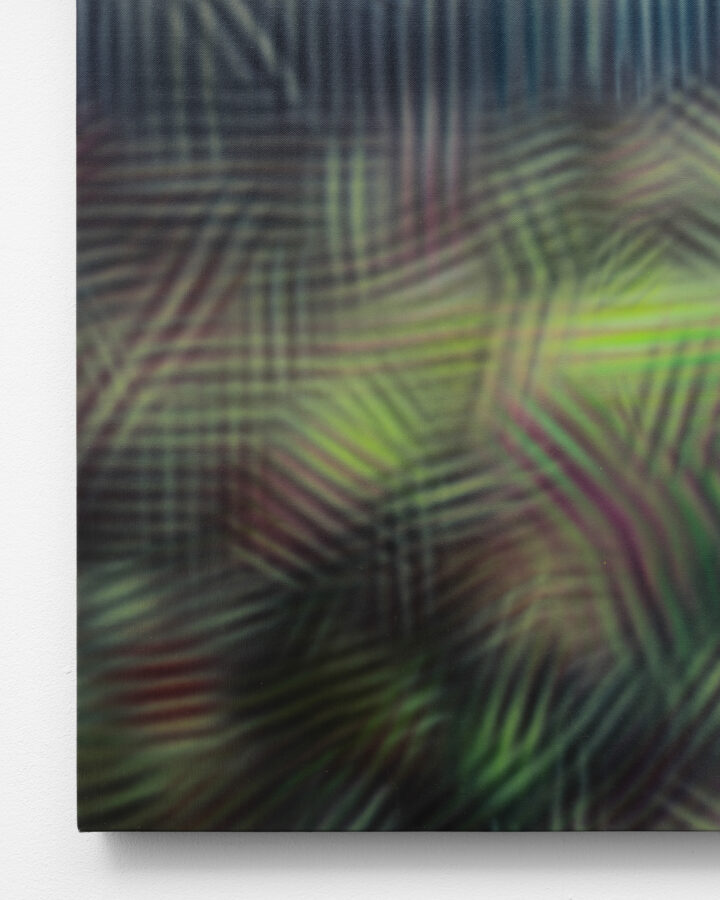
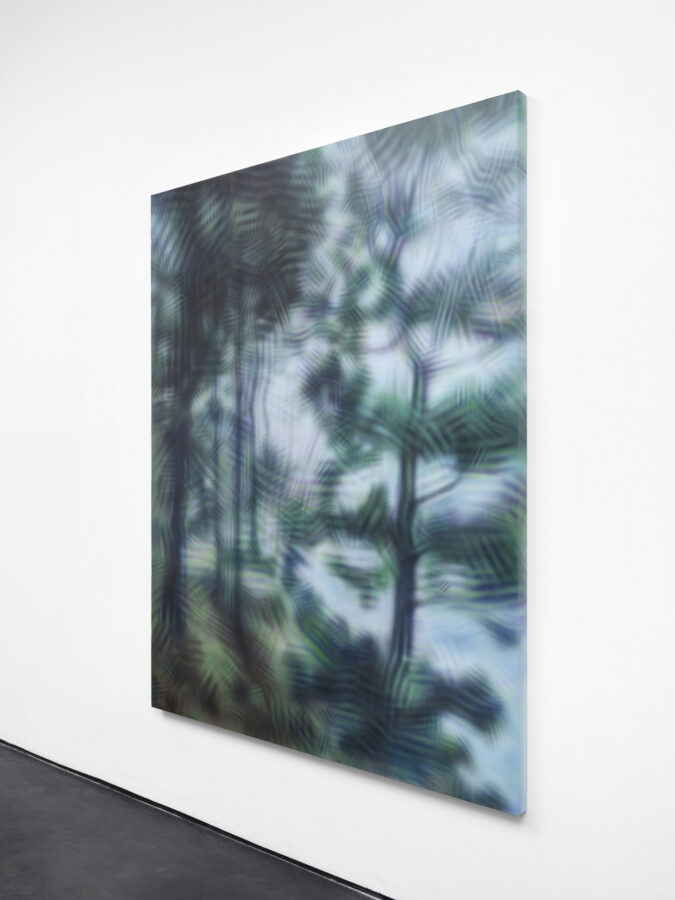
191 x 156 x 4.5 cm,
Photo: Marjorie Brunet Plaza
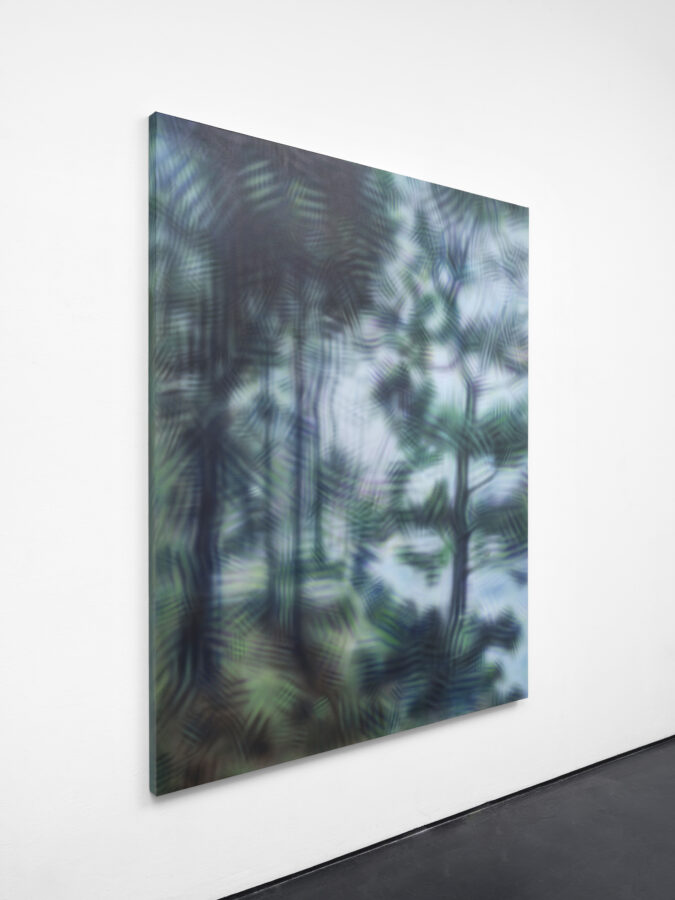
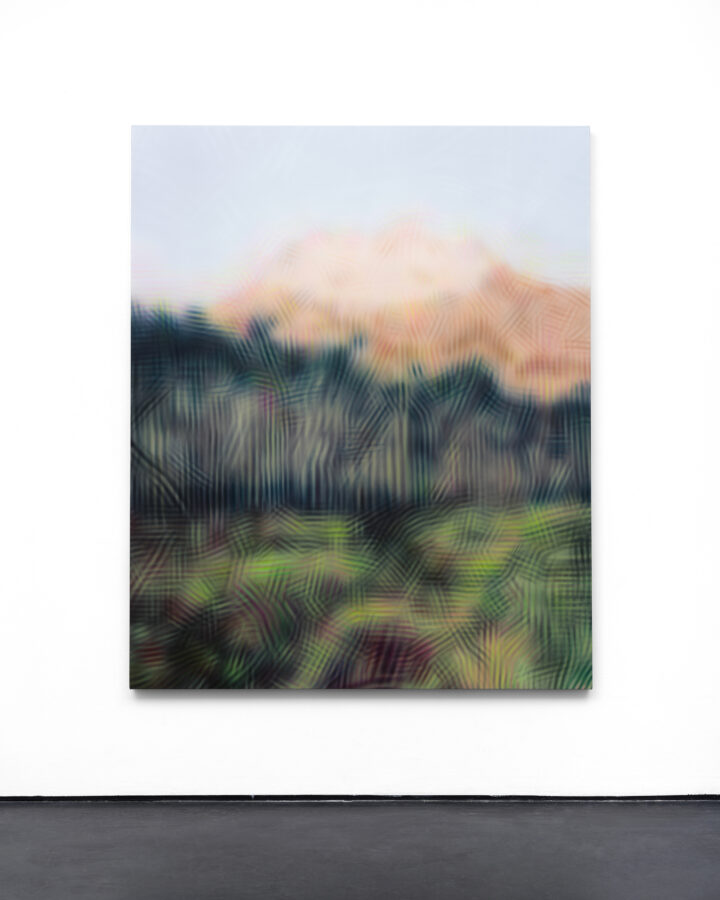
Acrylic paint on canvas, 191 x 156 x 4.5 cm,
Photo: Marjorie Brunet Plaza
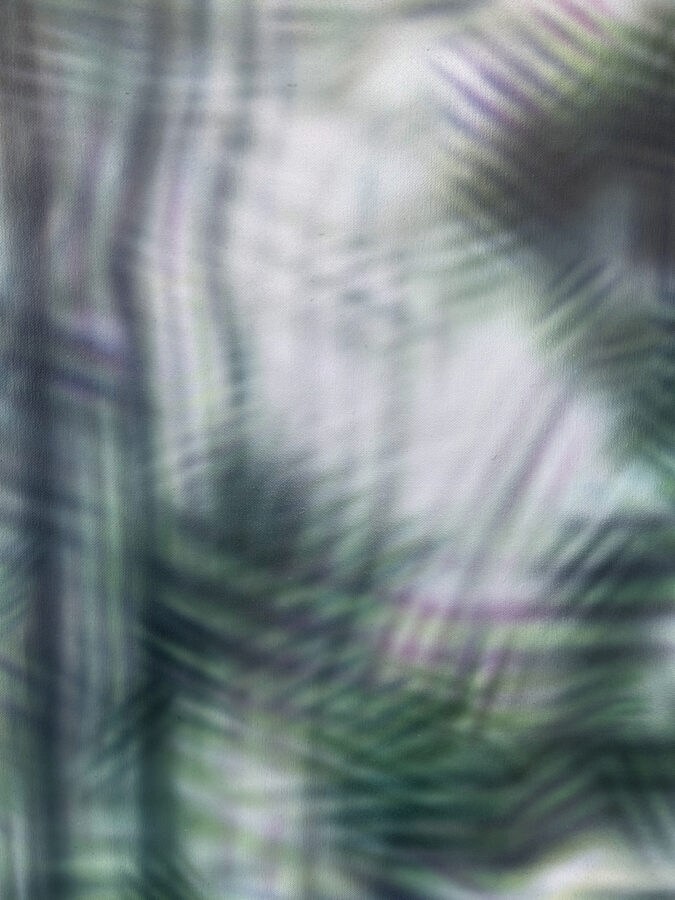
Detail,
Photo: Marjorie Brunet Plaza
Acrylic paint on canvas,
191 x 156 x 4.5 cm,
Photo: Marjorie Brunet Plaza
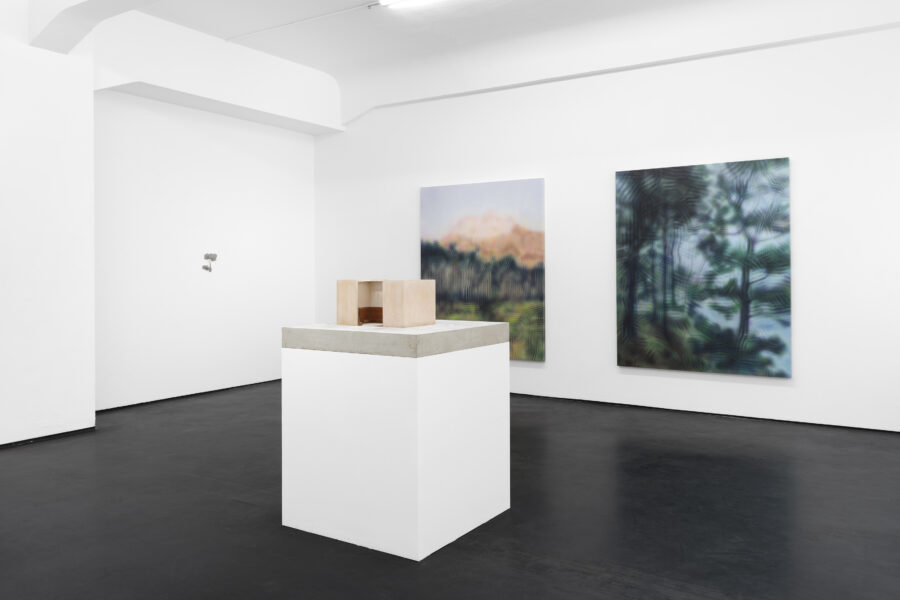
Installation view with ‘Ghost Specimen’ (wall) and maquette of ‘Skyspace’ by James Turell,
max goelitz gallery, Berlin, 2026,
Photo: Marjorie Brunet Plaza
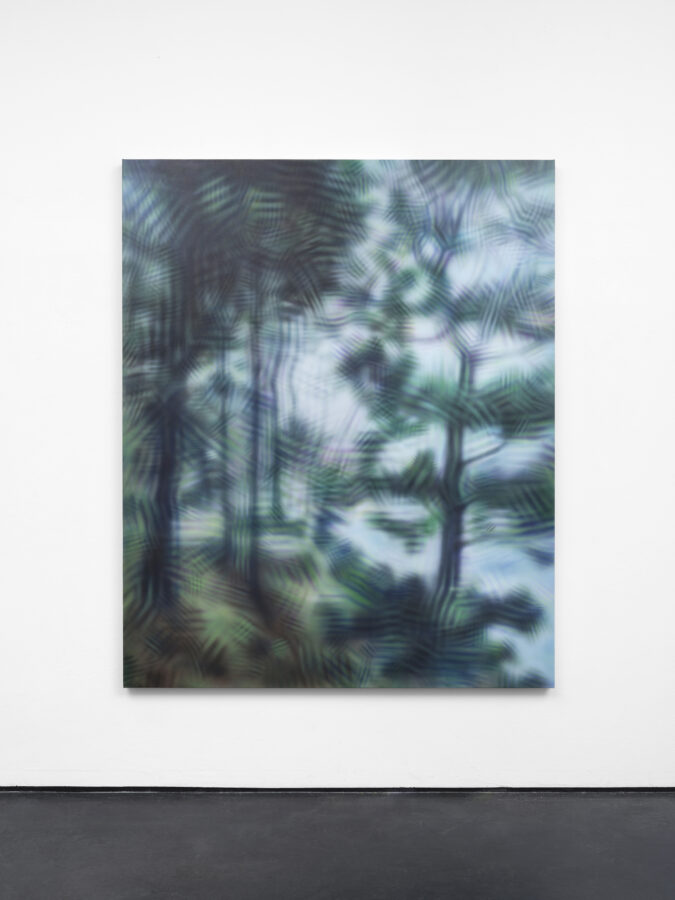
Photo: Marjorie Brunet Plaza
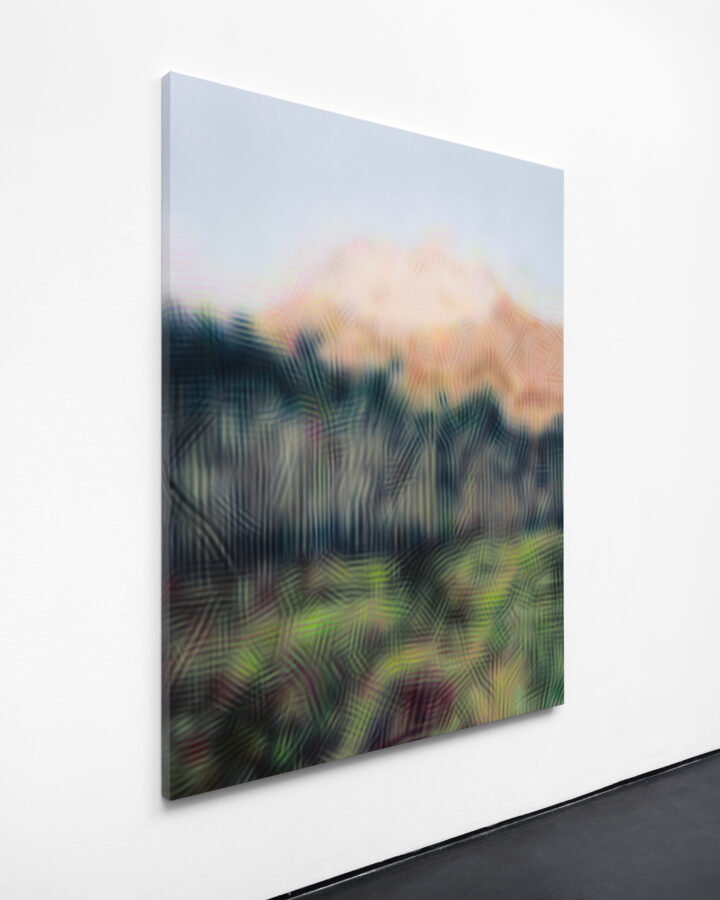
Acrylic paint on canvas,
191 x 156 x 4.5 cm,
Photo: Marjorie Brunet Plaza
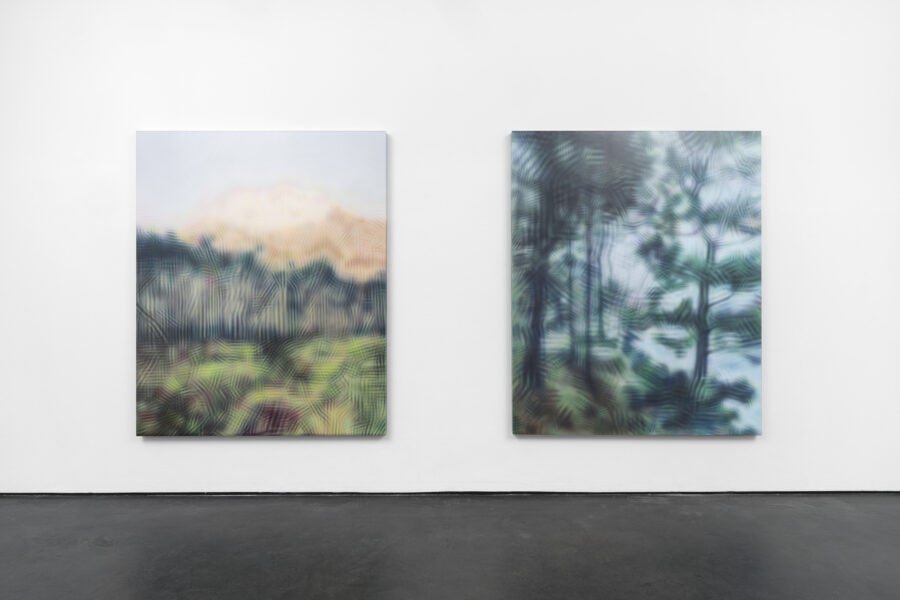
Installation view, max goelitz gallery, Berlin, 2026,
Photo: Marjorie Brunet Plaza
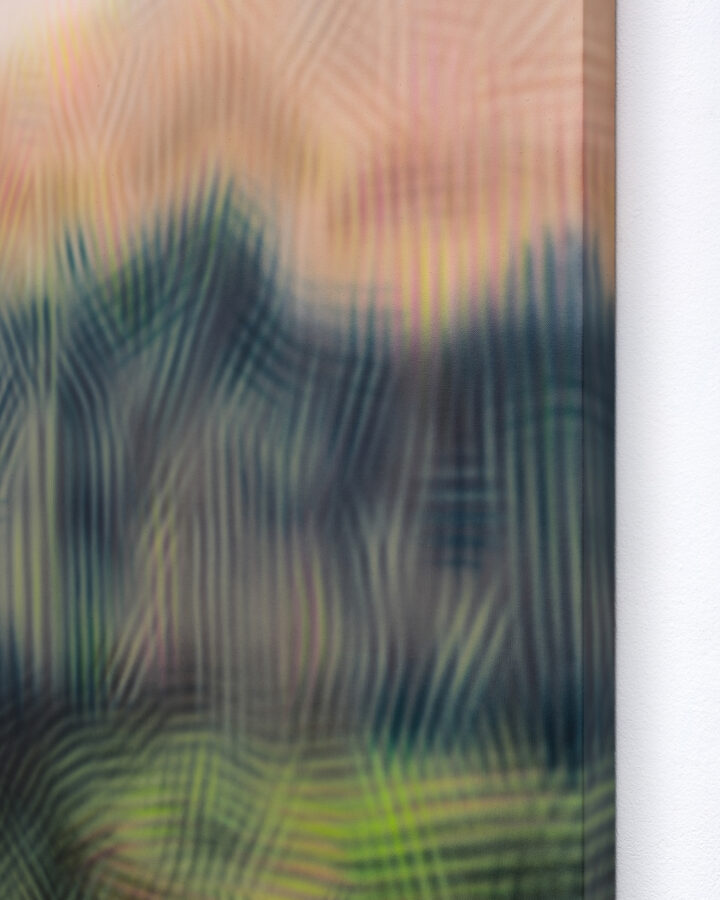
Photo: Marjorie Brunet Plaza
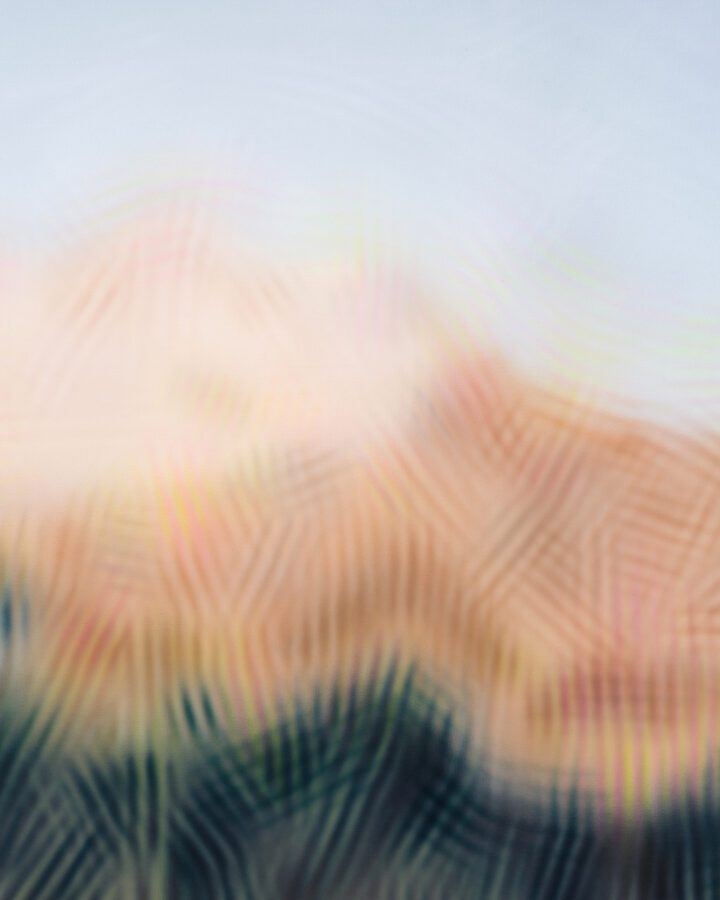
Photo: Marjorie Brunet Plaza
To find what you are not looking for.
A machine looking at a landscape is never only looking outward. The landscape is already the material of its vision — glass, copper, lithium, labour, extraction — returning through the very systems that enable machine sight. The painting series To Find What You Are Not Looking For begins from that reversal: machine vision turned back toward the terrains that produced it.
Machine perception is not neutral. It extracts: trees become edges, mountains become gradients, faces become codes, deserts become resource maps. Seeing is a form of separation and selection.
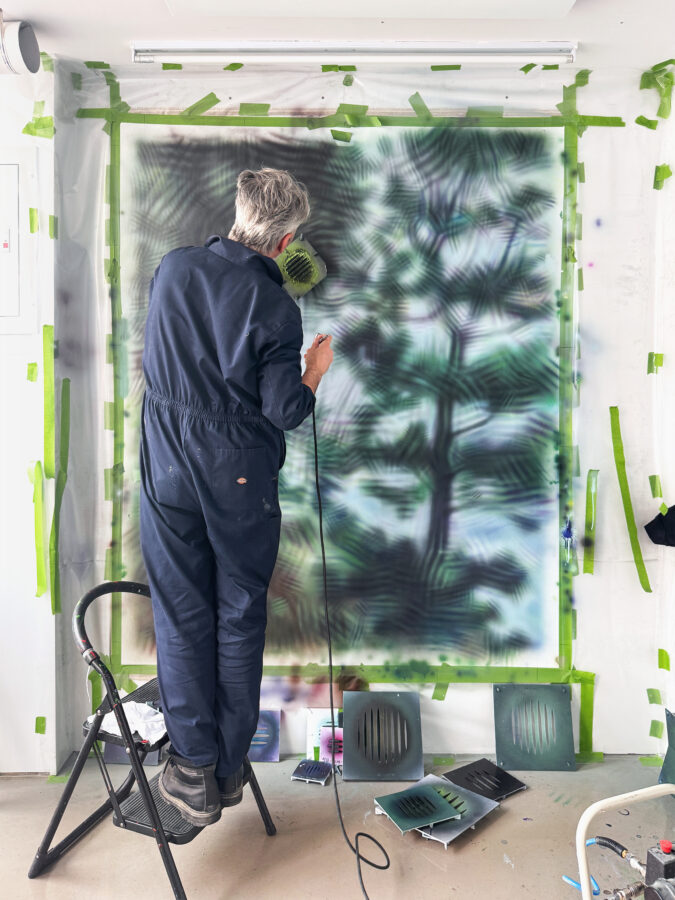
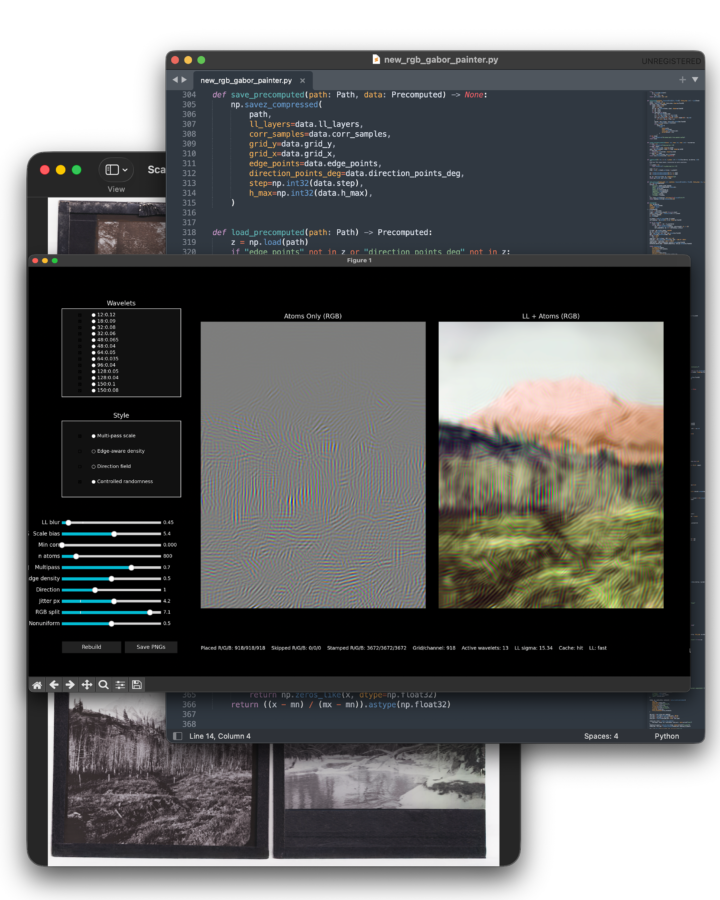
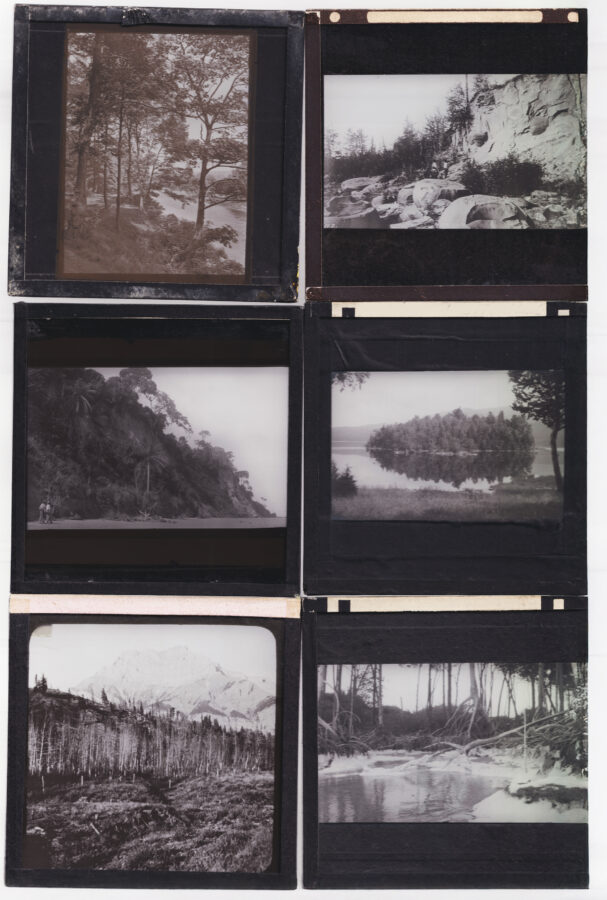
To Find What You Are Not Looking For enacts this logic and depicts scenes from historical geological slides from the Royal School of Mines painted in patterns drawn from frequency-based vision systems. Each image is decomposed into wavelets, translated into painting instructions, and rendered through layered pigment dispersal. What appears as landscape dissolves into oscillation, and re-emerges only at a distance. Recognition forms but does not stabilise. The image hovers between landscape and abstraction, resisting resolution. Instead of converting perception into capture, the works dwell in relation, interference, and dependency.
The project draws its title, To Find What You Are Not Looking For, from a 2019 conversation with computer scientist John Daugman, known for his work on iris recognition. His research reveals a paradox: identity is both singular and relational. The iris is recognised not as an image but as a field of interfering frequencies, analysed through wavelets that organise information across scale, orientation, and variation. Individuality emerges from patterns of overlap rather than fixed essence.
Wavelets hold together the local and global, signal and noise. They describe vision not as a flat picture but as a layered, unstable field. This logic underpins modern computer vision and surveillance systems, and it also reflects aspects of human vision. Seeing is therefore an active process of construction, not a passive recording of reality.
Machine vision formalises and intensifies this approach by treating the world as something to be analysed, measured, and extracted as information. In doing so, it extends a perceptual tendency to organise reality in terms of usefulness, threat, and resource, turning what we see into structured data that can be acted upon.
If vision operates through shifting, wave-like patterns, what does this imply about the nature of the things we see? What if what we call ‘objects’ are not fixed, independent entities, but temporary formations — stable enough for us to recognise, but emerging from a wider field of relationships and interactions? From this perspective, things are not isolated entities, but momentary patterns that form and dissolve within an ongoing, interconnected process of perception.
To Find What You Are Not Looking For resists the immediate transformation of seeing into taking, inhabiting a threshold where the world is not an object before us but a field passing through us — unresolved and in motion.