Arrivals Without Coordinates
2026
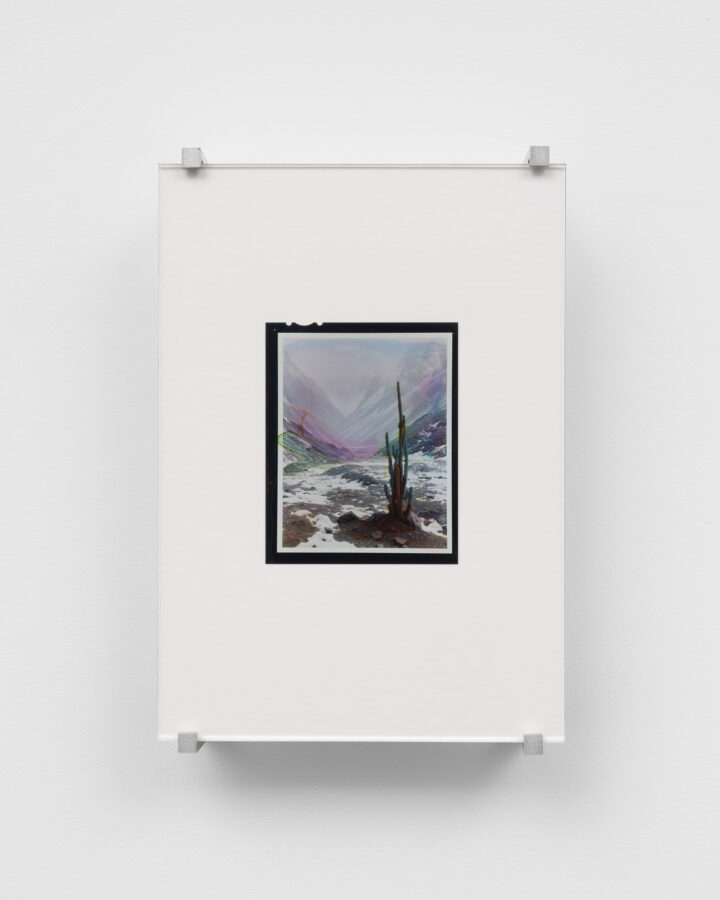
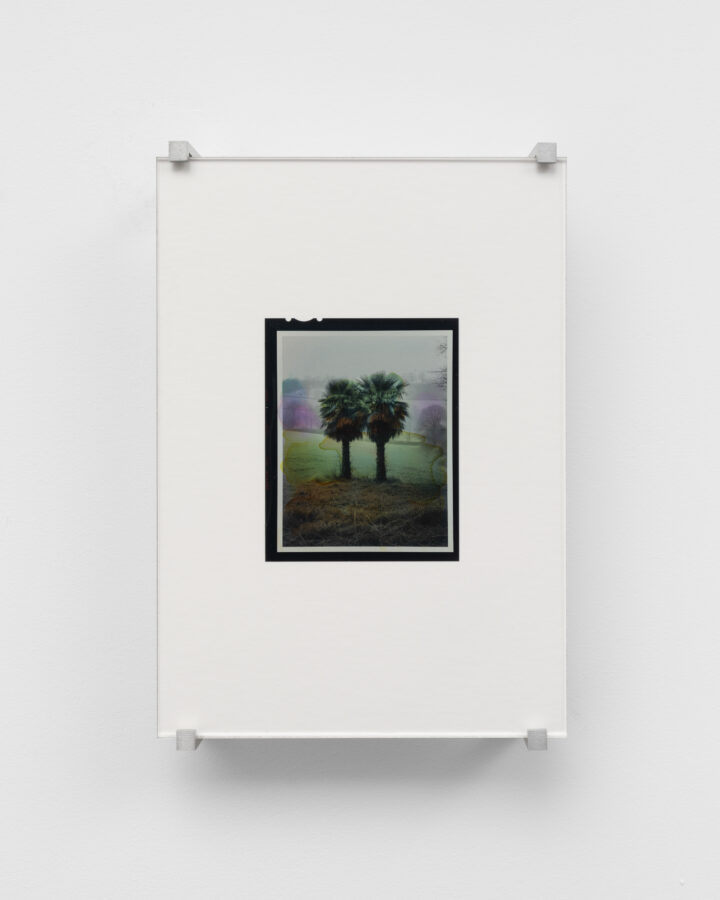
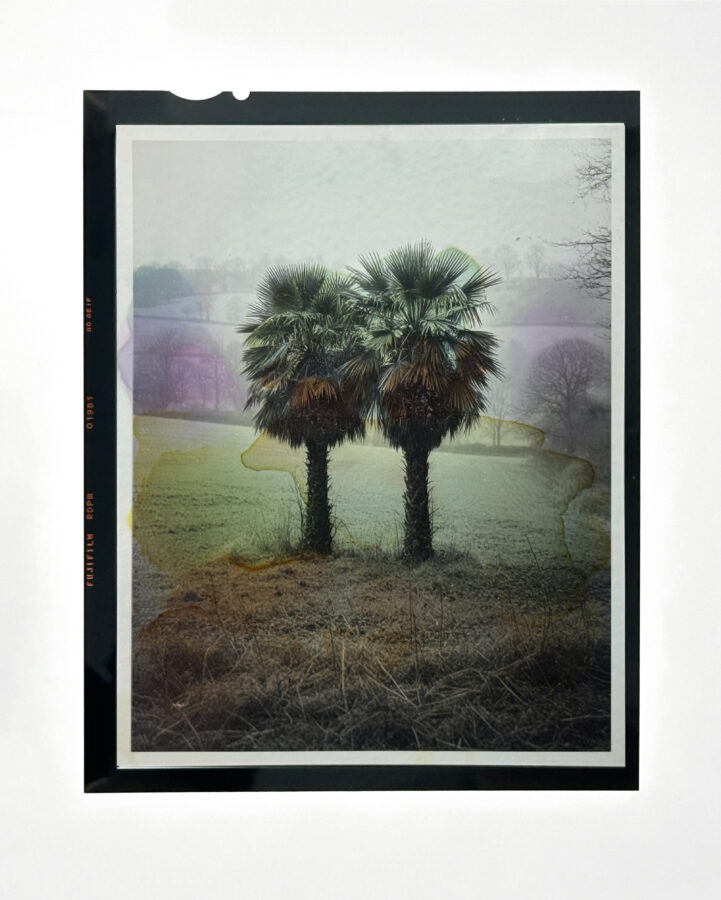
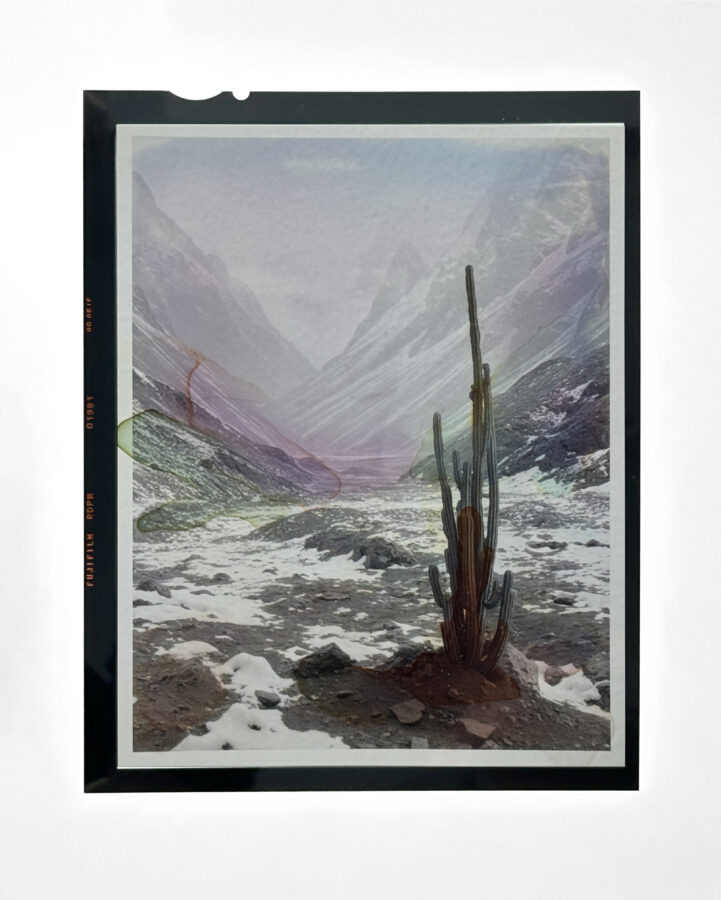
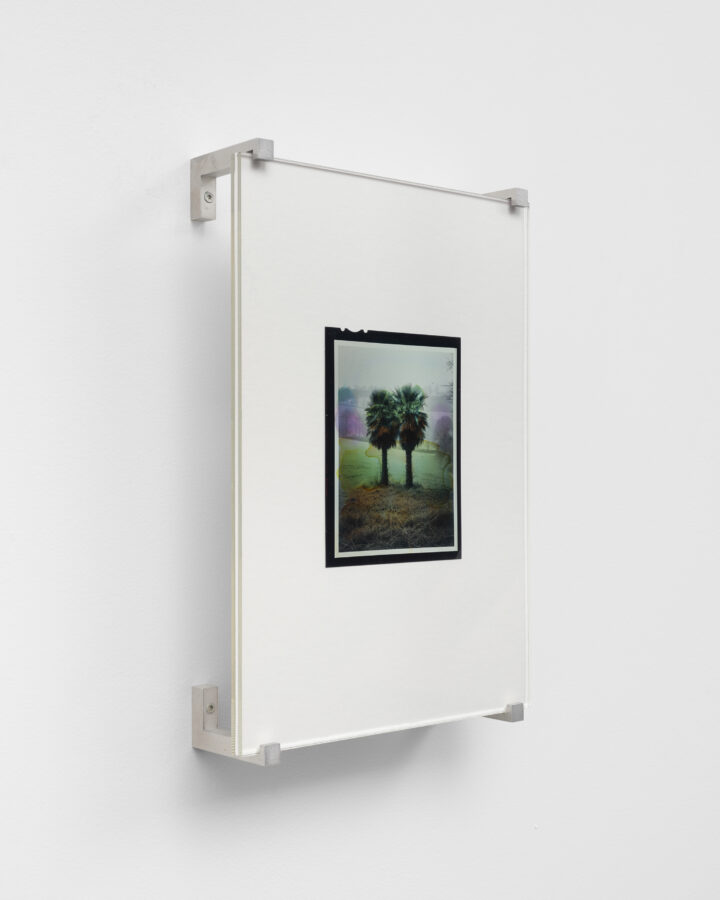
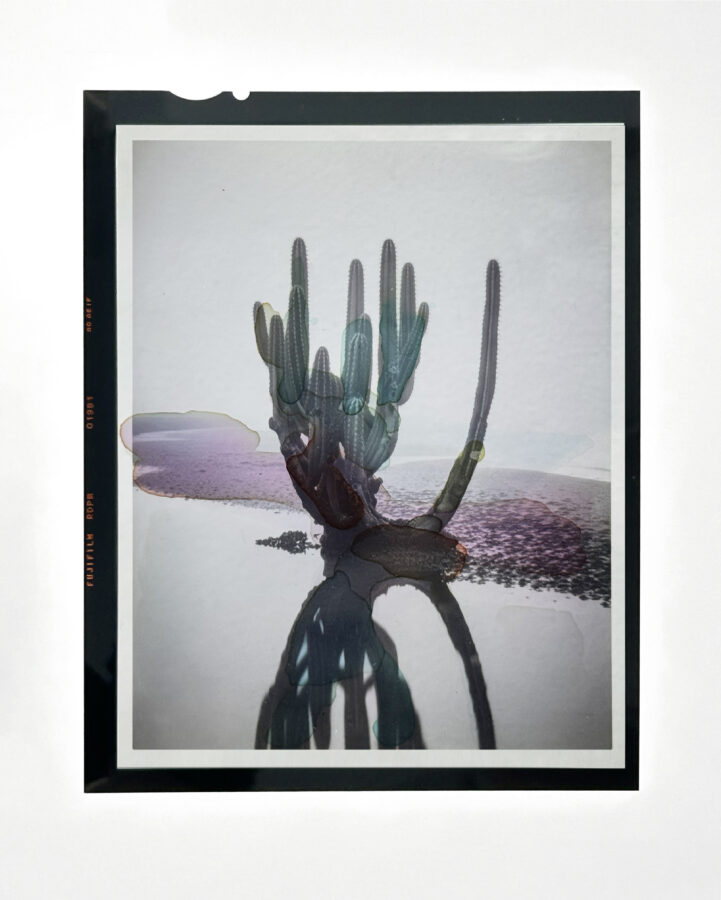
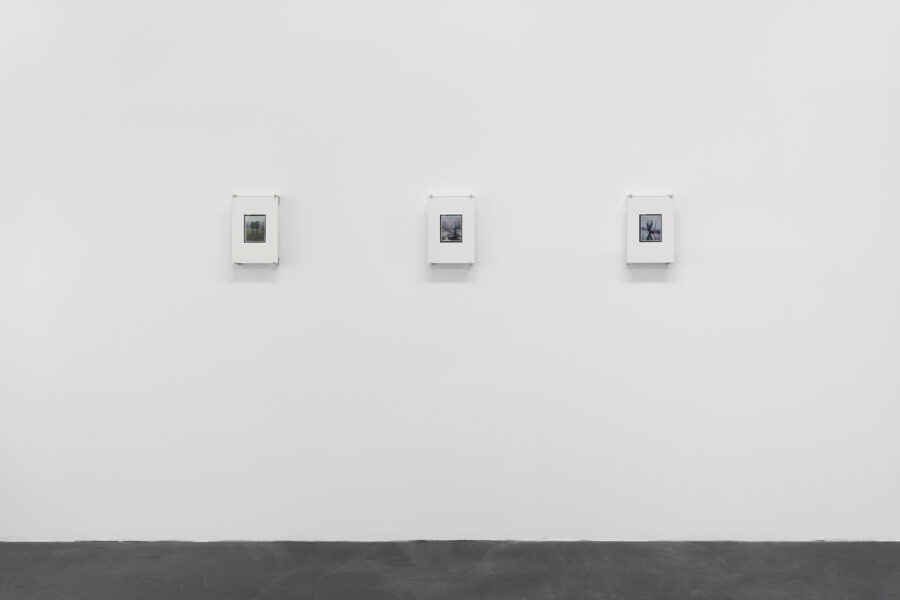


Arrivals without Coordinates charts a cartography of displacement and emergence, where extinct species, digital flora and machine-mediated visions converge.
It is a series of hand-coloured large-format transparencies in which photographic dye has been worked into the emulsion. The works draw upon an early photographic process that emerged in the mid-nineteenth century, when artisans applied transparent aniline dyes to lantern slides and film in order to create the illusion of full-colour images before the invention of colour photography.
The series reactivates this historical technique to stage impossible ecological encounters as landscapes conjured in split seconds by text-to-image generators folding computational image-making back into earlier technologies of recording, mapping, and territorial description.
Each plant is framed as a portrait rather than a specimen, as a form of presence rather than documentation: beings encountered across time and beyond territory, existing despite or untouched by geography and fixed coordinates, appearing in landscapes and climates where they do not belong: a Rapa Nui palm takes root in the pastoral landscapes of Cambridgeshire, a Key Largo cactus overlooks the Lost Valley in Zermatt, or emerges along the submerged shores of Doggerland, the prehistoric land bridge that once connected Britain to mainland Europe.
These environments are geographically improbable and temporally unstable, collapsing distinctions between past and present, migration and extinction, memory and projection.
Underlying the series is the historical relationship between photography, mapping, and systems of spatial control. Coordinates are often understood as neutral instruments of orientation, yet their histories are deeply entangled with empire, extraction, and administration. From astronomical surveying and colonial cartography to aerial reconnaissance and contemporary satellite imaging, visual technologies have transformed land into measurable, governable space. Photography participated in this process not only by recording territory, but by helping to operationalize it – the visual capture of land aligned with its material capture.
While systems of latitude and longitude emerged through multiple knowledge traditions – Babylonian, Greek, Islamic, Polynesian, Indigenous, Arab, African, and Chinese – modern forms of mapping enabled borders to be imposed, territories claimed, populations classified, and resources extracted, often erasing local spatial knowledge and ecological relationships in the process. Contemporary geospatial technologies continue these legacies through the concentration of satellite and mapping infrastructures within states and corporations, raising ongoing questions around surveillance, representation, and data colonialism.
Against this history, Arrivals without Coordinates proposes images that resist geographic certainty. The transparencies refuse the authority of the fixed viewpoint and the logic of territorial placement. Species drift across climates, epochs, and borders; landscapes become unstable and ungovernable. Rather than functioning as scientific records, the works operate as speculative portraits of survival – presences that exceed the systems designed to locate, classify, and contain them.
The Rapa Nui palm, once native to Easter Island in the remote Pacific, stood as a defining feature of the island’s ecosystem. Over time, widespread deforestation driven by human settlement, combined with the introduction of invasive Polynesian rats that consumed its seeds, led to its collapse. By the late medieval period, the palm had vanished from the landscape, leaving only remnants preserved in pollen and memory.
The Key Largo Cactus, a coastal species of the Florida Keys, already confined to a narrowing strip of limestone and scrub habitat, was pushed beyond recovery as rising sea levels, intensified storm surges, and human coastal modification accelerated the loss of its environment. By 2023, the cactus had disappeared from the wild, marking one of the clearest extinctions linked to climate-driven habitat change in North America.