No Sound of Water
2020
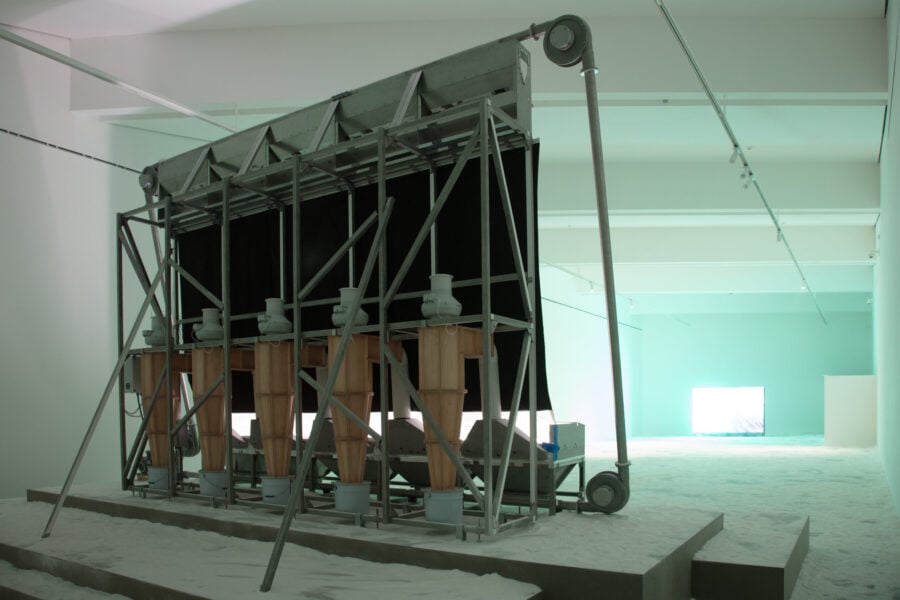
salt, modified industrial conveyor system, cotton polyester fabric,
6650 × 3850 × 1950 cm,
Installation View, Arte Abierto, Mexico City, 2021
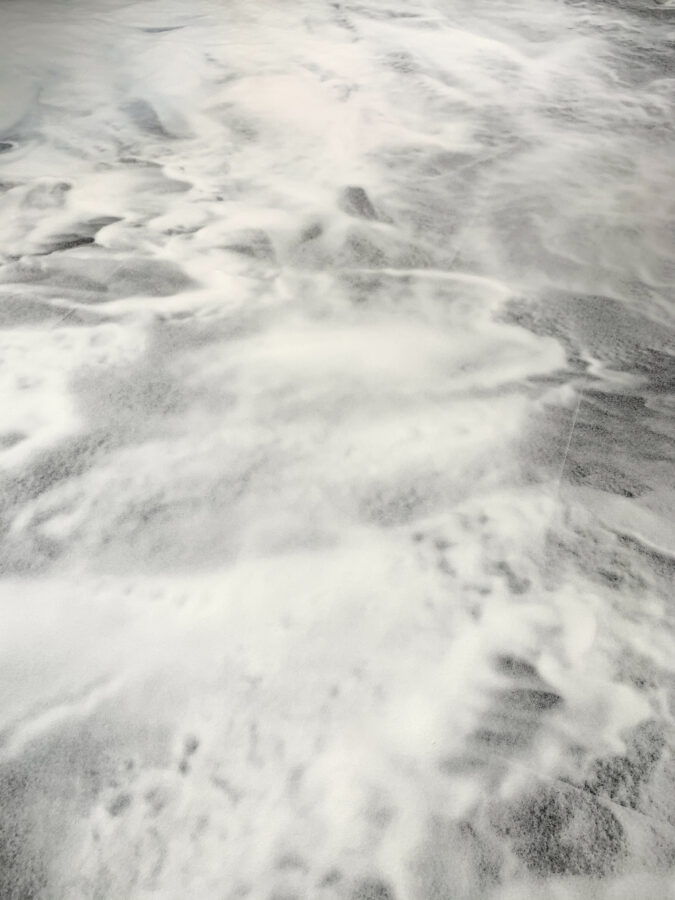
Arte Abierto, Mexico City, 2021
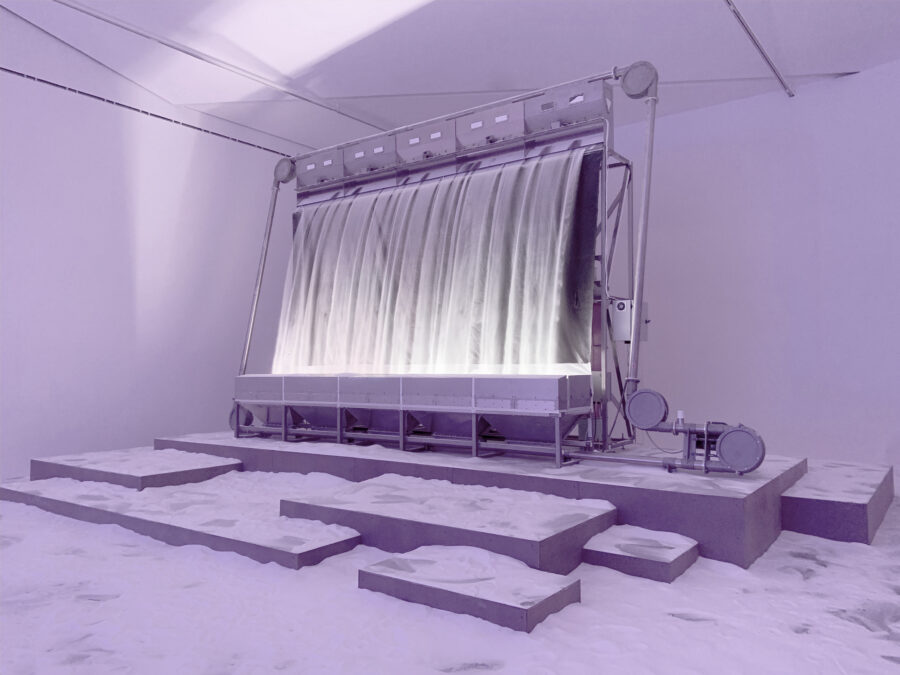
salt, modified industrial conveyor system, cotton polyester fabric,
6650 × 3850 × 1950 cm,
Installation View, Arte Abierto, Mexico City, 2021
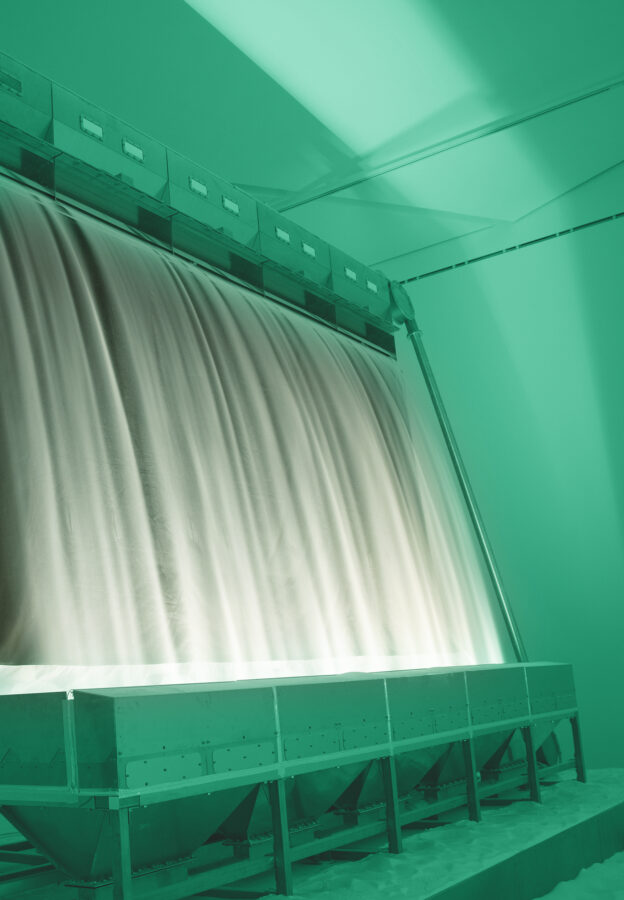
salt, modified industrial conveyor system, cotton polyester fabric,
6650 × 3850 × 1950 cm,
Installation View, Arte Abierto, Mexico City, 2021
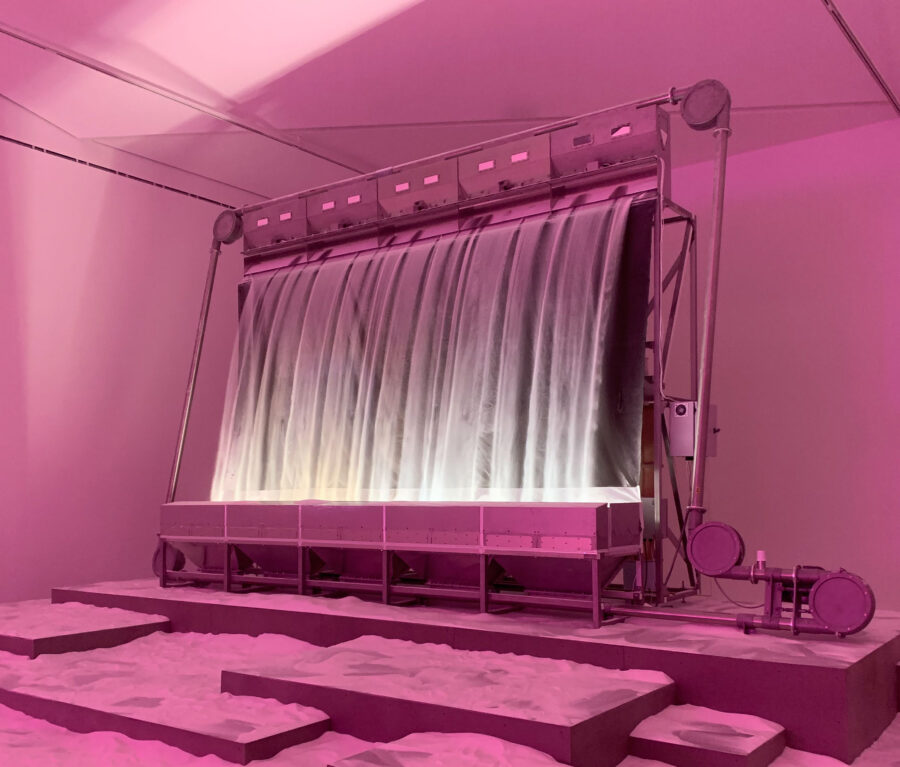
salt, modified industrial conveyor system, cotton polyester fabric,
6650 × 3850 × 1950 cm,
Installation View, Arte Abierto, Mexico City, 2021
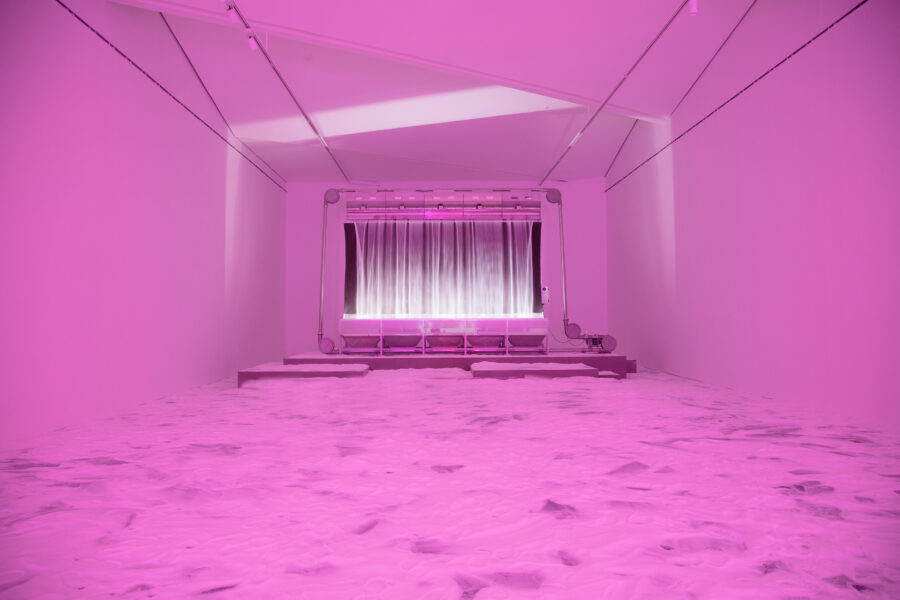
salt, modified industrial conveyor system, cotton polyester fabric,
6650 × 3850 × 1950 cm,
Installation View, Arte Abierto, Mexico City, 2021
In 1868, O’Sullivan took the first large-format photograph of the Shoshone Falls in Idaho, and, by virtue of the image’s dissemination, helped set in motion an invasion of settlers bringing with them irreversible change – and often destruction – to the landscapes he had documented. The gushing waterfall in his famous photograph is visible as a white mist, flowing like dry ice, reminiscent of the eerie miasma of so-called ectoplasm ‘captured’ in early spirit photography. The image of a world arrested at the crossroads, an embodiment of the sublime, a view that disrupts the mundane passage of time to reveal a supposedly more fundamental, more transcendent reality, one that predates and obliviously negates the arrival of the modern-day horrors of infrastructure, extraction, and touristic depletion.
Troika’s large mechanical object, titled , No Sound of Water,’ delivers a constant torrent of salt like a bottomless hourglass. It relentlessly conveys large quantities of table salt into the upper level of its framework and then rains a steady stream back down into its trough along its entire width like a waterfall. The structure itself is adapted from an industrial processing machine, a reference maybe to the extractive technologies that have contributed to the planet’s anthropocentric transformation. The elaborate construction is on constant duty, salt crystals always in motion and surely also, over time, increasingly uncontainable, spilling into the room, collecting in cracks in the floor, lungs, rolled up trouser legs, keyboards, and the lunches of gallery employees.
The romanticised pictorial tradition of the iconic waterfall shows up its industrial spine. No Sound of Water folds in a reference to early photography’s salt-based chemistry, and simultaneously illustrates the mise-en-scène of a metallic, machinic, wasteland cascade of posthuman folly. Maybe paradoxically, as a device of constant regurgitation and entropy, it also demonstrates what it means to generate a picture, especially a digital one: it is itself a Sisyphean image processor. Troika understand this as a transposition of the historic photographs and stereoscopic images into a physical structure that nonetheless simulates, by analogy, the waterfall: it is a virtual waterfall, in the sense of the term’s historic definition; not the thing itself, but the same thing in effect.
– Eva Wilson
Read more here: ’No Sound of Water’
Fundación Arte Abierto, Mexico City, 2021